My typical M.O. is to not really post much in the summer. I’d prefer being out enjoying nature than inside banging away at keys. So I have been absent from these pages for some time, but I have not been dormant, as you will see. I would normally have written a catch up post earlier in the winter, but I have been busy recording music (check that out here if you want). This year has some potentially large changes in store, so I hope to write about them as they happen. I use a laptop now, so I could conceivably write posts in a tree if I so desired.
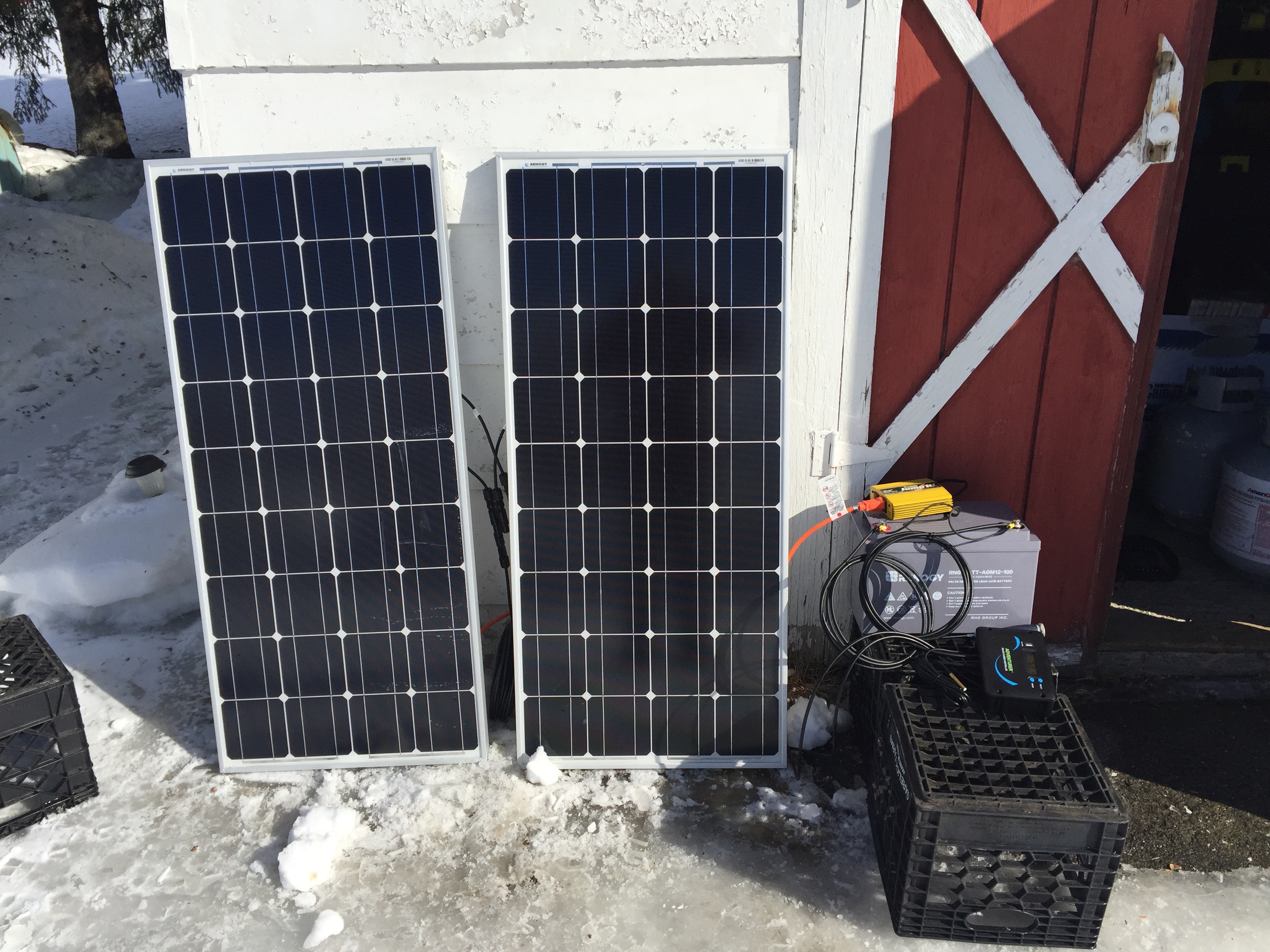
The latest and greatest news is… SOLAR PANELS!! They are not installed yet, except to test them out. There will be a post dedicated to this project, so I will not get into a lot of detail here. I have 2 panels totaling 200 Watts, and battery rated at 100 Amp Hours. The battery is an AGM deep cycle variety. It’s considerably more money than a marine battery, but I’m aiming to do this correctly from the start and avoid the pitfalls many others have endured. I have 30 Amp charge controller as well. All of these components are made by Renogy. I also picked up an additional monitor that I’m hoping will help me keep a close eye on the condition of the battery.

I finally picked up an auto-changeover dual propane regulator. So many nights I wondered if the tank would last until morning. Sometimes it didn’t, forcing me to change it at 2AM by headlamp in 20 below temps. It ran out once when I was doing an overnight shift at work, and I returned home to a frozen water system. Now, when one tank empties, the lack of pressure will force the regulator to switch to the full tank! I have my tanks filled rather than exchange them, so I could have simply swapped my tanks when I knew they were close to empty. I just prefer to let them tap out, especially since the odor additive is settled at the bottom. In theory, a tank that is always filled before it’s empty could accumulate a higher percentage of additive. I could be wrong about the implications of that.

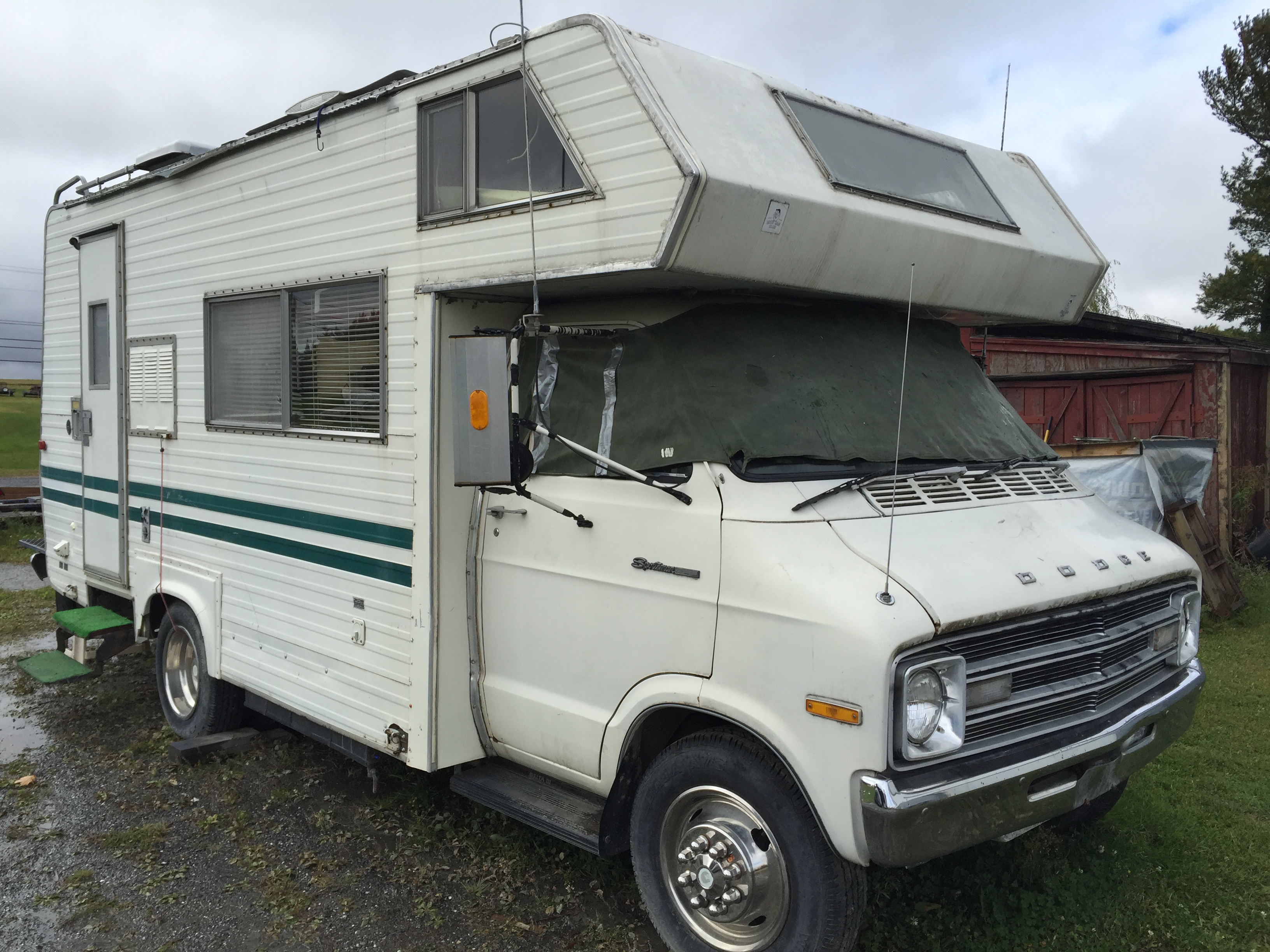
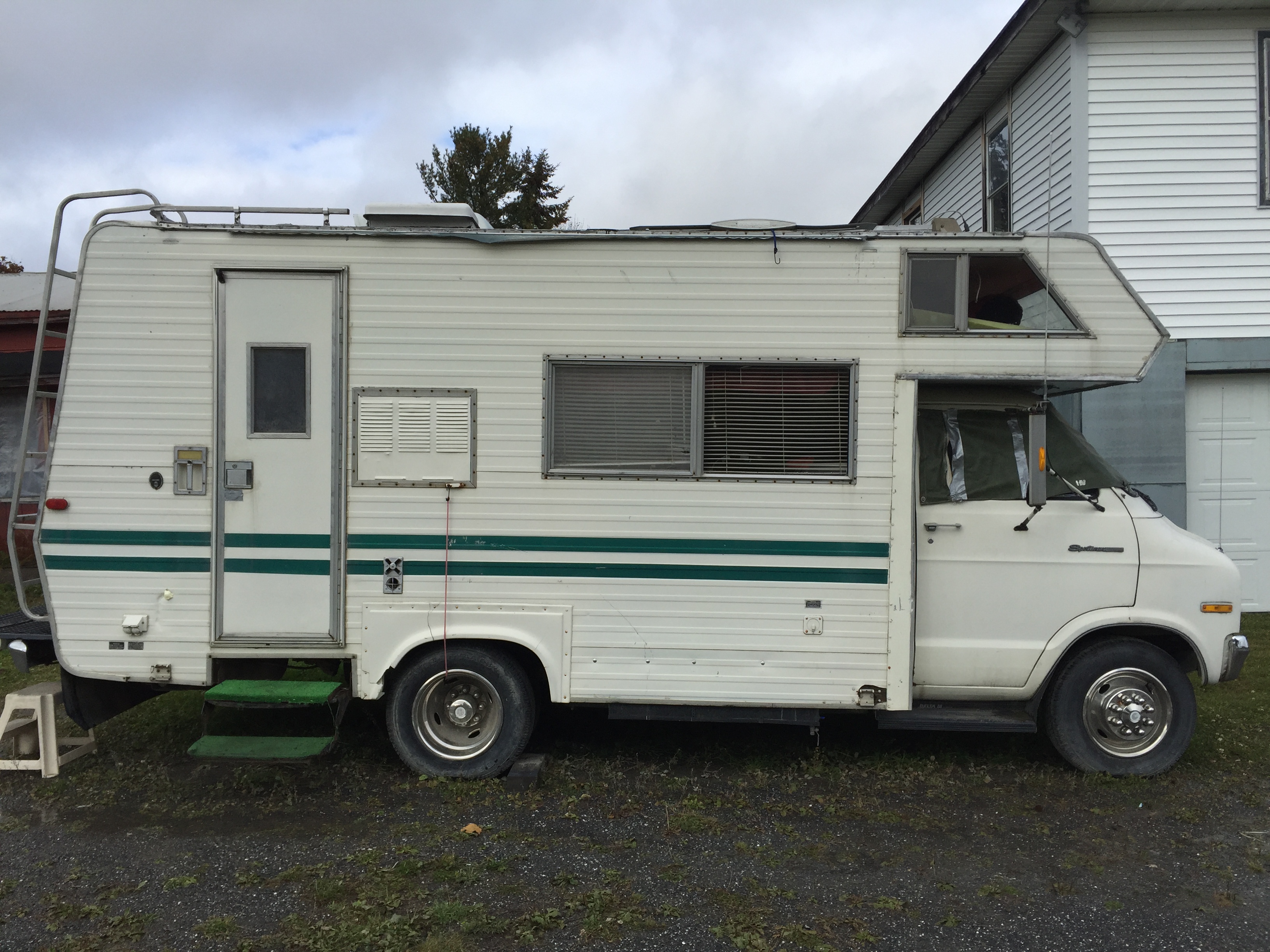
New furnace! This was not planned. Two weeks ago, my furnace started acting up. The motor and/or blower were struggling to remain in motion. I hoped it would hold on for the season, but alas it was not to be. I had to break down and replace it. The furnace was the only appliance in this 1977 camper that was original. So that thing was as old as me. I replaced it with the modern equivalent of the same model, so it was an easy swap. The new unit heats up faster and has a much stronger blower. I guess thats one less headache for next year.

I got to meet The Minimalists! On their last tour, they stopped in Portland, Maine to record an episode of their podcast. I ventured down for a great show, and even ended up on the podcast. Check out Episode 75 Here. They were super gracious, humble, and big huggers. Look how “minimal” I look next to these fellas!

I didn’t do much gardening this year. I got too late of a start. I managed to get a good load of organic Napoli carrots. This year, I may begin to develop some new land with a bee friendly cover crop that will also replenish nitrogen and CO2. My gardening plan for this year aims to be 100% organic, no till, and much broader in selection. I will certainly return to hydroponics someday, but right now the budget and logistics make that much lower on the priority list.
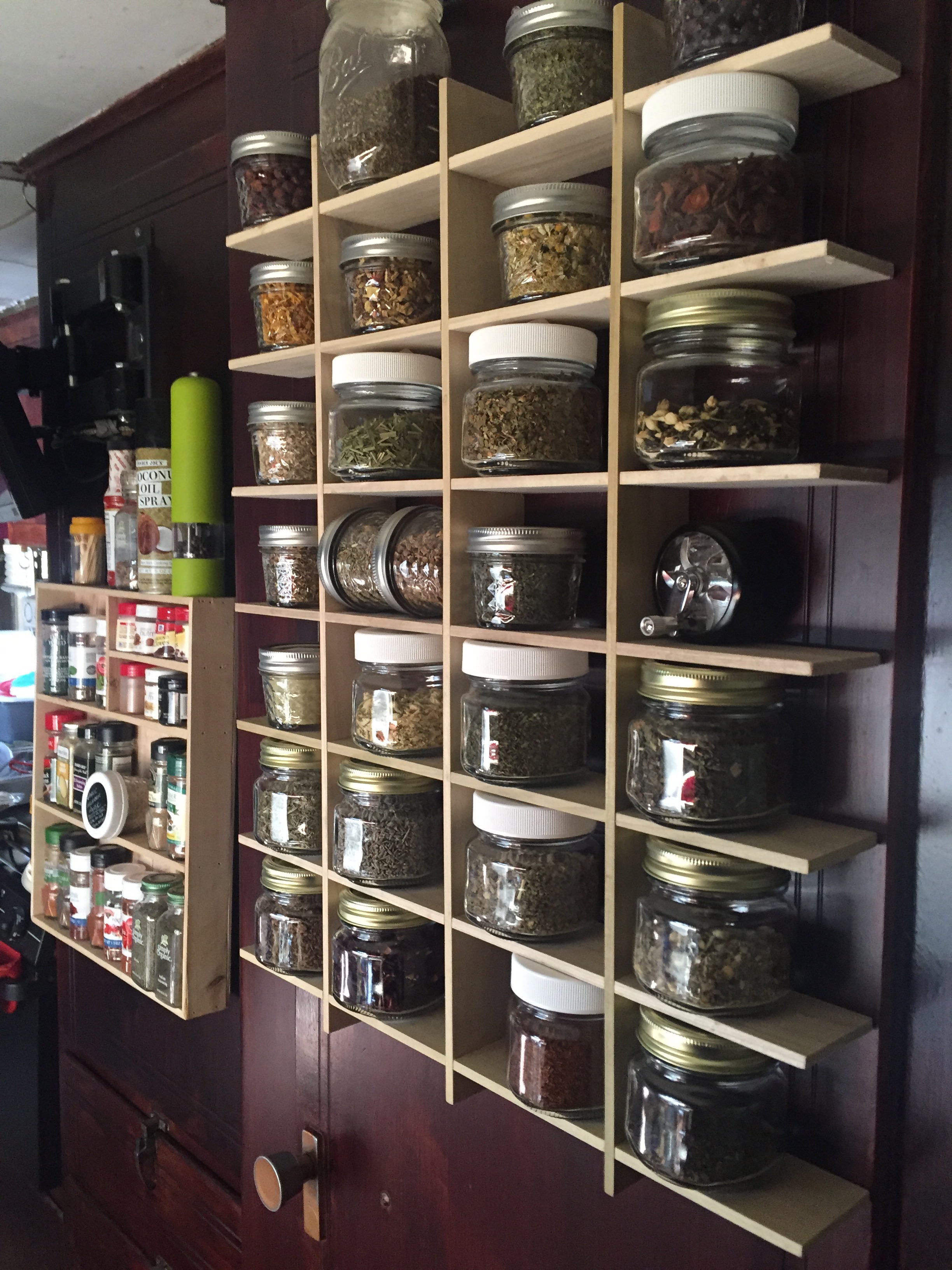
I have ventured deeper into the realm of natural and holistic approaches to life in all aspects. I picked up an encyclopedia of herbal remedies, invested in a large selection of teas, herbs, spices, and collected a pretty impressive array of essential oils and related accoutrements. So far, I have treated a number of ailments with pleasing results. I have been blending concoctions for household cleaning, skin care, deodorant, well being, inflammation, etc… I am going to dedicate a section of this site to these practices and share some recipes.
 Lots of other things took place. I fixed all of my screens. I got a new porta potti (the valve started to leak on the old one, not a situation you let linger). I hung some Tibetan prayer flags. Despite being a loner (maybe even a “recluse”?), I learned what its like to navigate this small space for an extended time with another being. I found it to be not only possible, but pleasant. It takes a sort of graceful dance of body and mind to make it work, but it works. This applies to a relationship of an intimate nature, mind you. I don’t think I could tolerate an extended guest otherwise. It also helps if the person is on the same lifestyle wavelengths as you. Though that experiment has drawn to a close, it held many profoundly important and worthwhile lessons.
So the future? After I verify my solar abilities, I plan to move the camper off grid. I’ve got access to a many acre plot where two brooks connect. With solar for power, and a natural source of water, it’s time to cut my umbilical and fly. I think there will be much farming on this land in the years to come, and maybe even some bee hives. Of course, I never plan that much in advance, I let the universe guide me. I’m pretty terrified what a winter off grid will be like. I’ll have to snow shoe in/out. All of my processes will have to change. There are many potential hardships, and I may find it’s not possible (yet) with my current setup. But thats the path I’m walking down at the moment, and there is a jaunt in my step. More will be revealed…




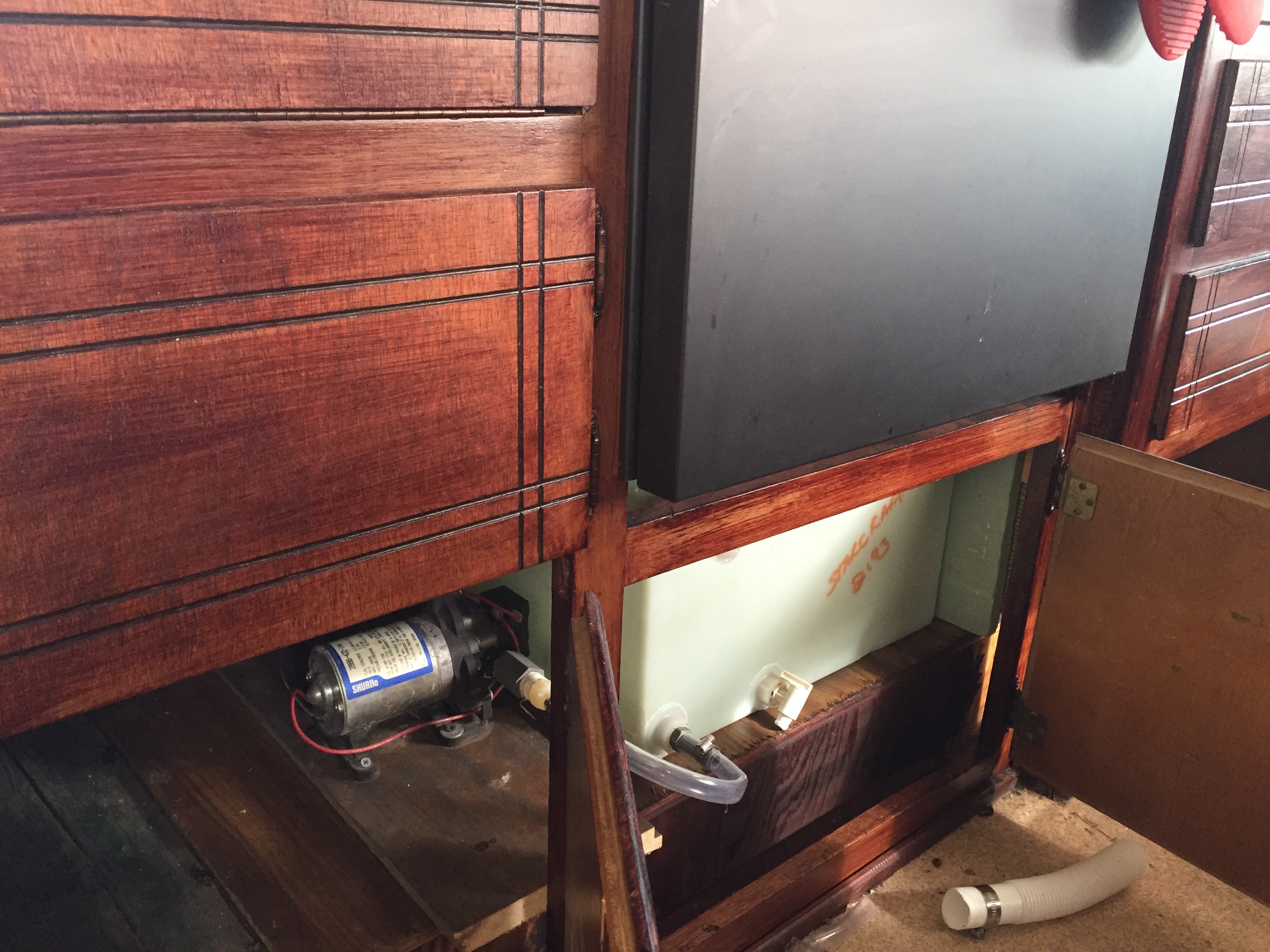
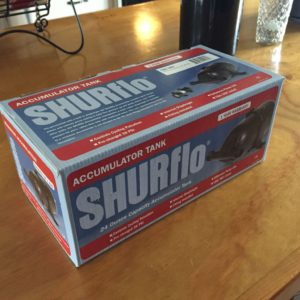 If you use a 12 Volt RV style pump for your water, you need to install one of these RIGHT NOW!
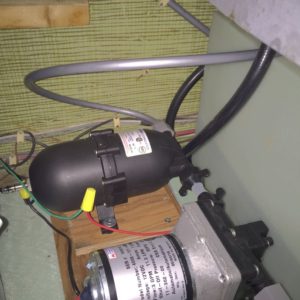 pressure vessel that contains a bladder that is filled with air to 30 PSI. When water is pumped in, it compresses that bladder, increasing the pressure to a point that tells the pump to turn off. When I open the faucet, the initial water pressure comes from the ACCUMULATOR, not the pump. This means that I can turn the faucet on as little or as much as I need to. As the water leaves the accumulator, the pressure eventually drops until the pump turns on to maintain the flow of water. When the faucet is turned off, the pump will continue to run, filling the accumulator until the bladder provides enough pressure to turn the pump off. It’s a lot like a capacitor, but it stores hydraulic energy as opposed to electrical. And, much like a capacitor will filter or “smooth” out a signal, this smooths out the water flow. It took a moment to get used to, as the pump does not turn on right away with the faucet, and it runs for a few seconds after you turn it off.